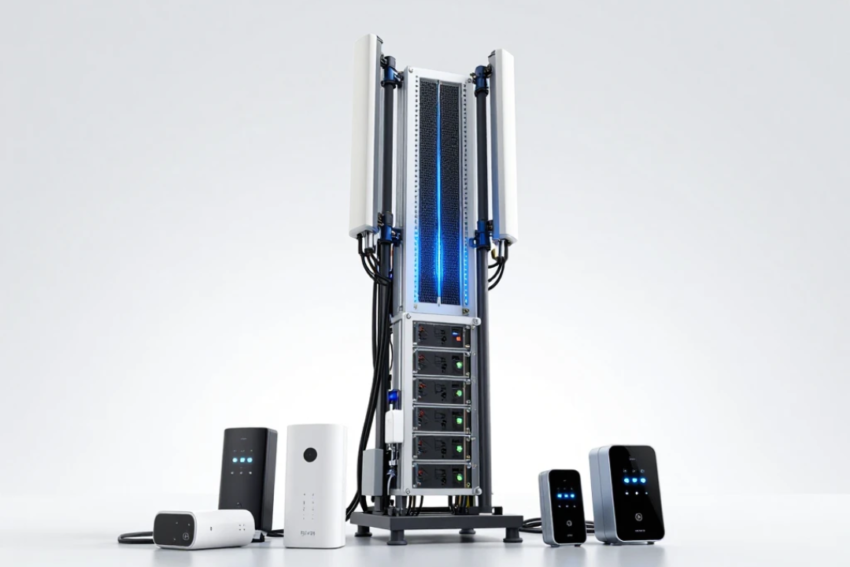
Introduction
The world is becoming increasingly connected with the rapid growth of smart devices and the Internet of Things (IoT). From smart homes and wearable devices to industrial machines and smart cities, billions of devices are now communicating with each other through wireless networks.
However, as the number of connected devices continues to grow, traditional networks face challenges such as limited speed, higher delays, and reduced efficiency. This is where 5G technology plays an important role.
The combination of 5G and IoT is creating a new era of faster, smarter, and more reliable connectivity. With ultra-fast speeds, extremely low latency, and the ability to connect millions of devices simultaneously, 5G is helping businesses and consumers use smart technology more effectively.
In this article, we will explore the role of 5G in IoT and smart devices, its benefits, applications, challenges, and how it is shaping the future of connected technology.
What is IoT (Internet of Things)?
The Internet of Things (IoT) refers to a network of physical devices connected to the internet that can collect, share, and exchange data without requiring constant human interaction.
These devices contain sensors, software, and communication technologies that allow them to perform smart functions.
Examples of IoT devices include:
- Smart watches
- Smart home appliances
- Security cameras
- Smart thermostats
- Connected vehicles
- Industrial machines
- Healthcare monitoring devices
- Smart farming equipment
IoT technology helps devices become more intelligent by allowing them to analyze data and make automated decisions.
What is 5G Technology?
5G is the fifth generation of wireless network technology designed to provide faster speeds, lower latency, and improved connectivity compared to previous networks like 4G.
While earlier mobile networks mainly focused on improving smartphone communication, 5G is built to support advanced technologies such as:
- Internet of Things (IoT)
- Artificial Intelligence (AI)
- Robotics
- Autonomous vehicles
- Smart cities
- Virtual reality (VR)
The advanced features of 5G make it the ideal network technology for supporting billions of connected devices.
Why Does IoT Need 5G?
IoT networks require reliable communication between thousands or even millions of devices. Traditional networks may struggle when handling large amounts of data from connected devices.
5G solves many of these challenges by providing:
- Higher connection capacity
- Faster data transfer
- Lower response time
- Better energy efficiency
- More reliable communication
With 5G, IoT devices can exchange information instantly, making smart systems more efficient and accurate.
Key Roles of 5G in IoT and Smart Devices
1. Faster Data Transfer
One of the biggest advantages of 5G for IoT is its high-speed data transmission.
Smart devices continuously collect and send large amounts of data. For example, security cameras, autonomous vehicles, and industrial sensors require fast communication to work effectively.
5G allows these devices to transfer data quickly, improving performance and reducing delays.
2. Ultra-Low Latency Communication
Latency refers to the delay between sending and receiving data.
Many IoT applications require instant responses. For example, a self-driving car must react immediately to traffic conditions and obstacles.
5G reduces latency to nearly real-time levels, making it suitable for:
- Autonomous vehicles
- Remote healthcare
- Industrial automation
- Smart security systems
Low latency improves safety, efficiency, and user experience.
3. Connecting Millions of Devices
One of the biggest challenges in IoT is managing a massive number of connected devices.
5G networks are designed to support millions of devices in a small area without reducing performance.
This capability helps power:
- Smart cities
- Large-scale industrial systems
- Connected transportation networks
- Smart buildings
With 5G, more devices can communicate efficiently at the same time.
4. Improved Reliability
IoT applications often require continuous and stable connections.
A network failure can create serious problems, especially in healthcare, manufacturing, and transportation.
5G provides more reliable communication, ensuring that smart devices remain connected and operational.
5. Better Energy Efficiency
Many IoT devices operate on small batteries and need to save power.
5G technology improves energy management by allowing devices to communicate more efficiently.
This helps extend battery life for:
- Wearable devices
- Smart sensors
- Remote monitoring systems
Applications of 5G in IoT and Smart Devices
1. Smart Homes
5G is improving smart home technology by enabling faster communication between connected devices.
Examples include:
- Smart lights
- Smart locks
- Smart cameras
- Smart speakers
- Smart appliances
With 5G connectivity, homeowners can control devices remotely with faster response times.
2. Smart Cities
Smart cities use IoT devices to improve public services and resource management.
5G supports smart city applications such as:
- Intelligent traffic management
- Smart street lighting
- Waste management systems
- Public safety monitoring
- Smart parking solutions
The combination of 5G and IoT helps cities become more efficient and sustainable.
3. Healthcare and Medical Devices
The healthcare industry benefits greatly from 5G-powered IoT devices.
Examples include:
- Remote patient monitoring
- Smart medical equipment
- Wearable health trackers
- Remote consultations
Doctors can receive real-time health data from patients, improving diagnosis and treatment.
4. Connected Vehicles
Modern vehicles rely heavily on communication technology.
5G enables vehicles to communicate with:
- Other vehicles
- Traffic systems
- Road infrastructure
- Cloud platforms
This improves road safety and supports the development of autonomous vehicles.
5. Industrial IoT (IIoT)
Factories and industries are adopting IoT technology to improve automation and productivity.
5G supports:
- Smart robots
- Automated production lines
- Real-time equipment monitoring
- Predictive maintenance
Manufacturers can reduce costs and improve operational efficiency.
6. Smart Agriculture
Farmers are using IoT devices to monitor crops, soil, and weather conditions.
5G helps connect:
- Smart irrigation systems
- Agricultural drones
- Soil sensors
- Automated farming equipment
This allows farmers to increase productivity while reducing resource waste.
Benefits of 5G for IoT Devices
The combination of 5G and IoT provides several important benefits:
Enhanced Performance
Faster speeds and lower latency improve the performance of smart devices.
Real-Time Decision Making
Devices can analyze and respond to data instantly.
Improved Automation
Businesses can automate more processes using connected technologies.
Better User Experience
Consumers enjoy faster and more reliable smart device performance.
Increased Innovation
5G enables the development of new IoT applications that were previously difficult to implement.
Challenges of Using 5G for IoT
Although 5G provides many advantages, there are still some challenges.
High Infrastructure Costs
Building 5G networks requires significant investment in new equipment and infrastructure.
Security Concerns
As more devices become connected, cybersecurity risks increase.
Companies need strong security systems to protect IoT networks and user data.
Limited Coverage
5G availability is still expanding, and some remote areas may not have access to advanced networks.
Device Compatibility
Existing IoT devices may require upgrades or replacement to fully support 5G technology.
Future of 5G and IoT
The future of 5G and IoT is expected to bring even more advanced technologies.
In the coming years, we may see:
- Fully automated smart cities
- Advanced AI-powered devices
- More intelligent robots
- Improved healthcare solutions
- Autonomous transportation systems
- More connected homes and workplaces
As 5G networks expand worldwide, IoT technology will become more powerful, accessible, and efficient.
Frequently Asked Questions (FAQs)
How does 5G improve IoT?
5G improves IoT by providing faster speeds, lower latency, better reliability, and support for millions of connected devices.
Why is 5G important for smart devices?
5G allows smart devices to communicate faster and more efficiently, improving automation and real-time performance.
Can IoT work without 5G?
Yes, IoT can work with existing networks, but 5G provides better performance for advanced IoT applications.
What industries benefit from 5G IoT?
Industries such as healthcare, transportation, manufacturing, agriculture, and smart cities benefit from 5G-powered IoT solutions.
Conclusion
The role of 5G in IoT and smart devices is transforming the way people and businesses use connected technology. With faster speeds, lower latency, greater reliability, and support for millions of devices, 5G is creating new possibilities for smart homes, smart cities, healthcare, transportation, and industries.
Although challenges such as cost, security, and network availability remain, the combination of 5G and IoT will continue to shape the future of digital innovation. As more devices become connected, 5G will serve as a powerful foundation for a smarter and more connected world.