
By Chef Ahmad | CookDawn
🥦 The Crunch That Sounds Like Fried Chicken — From a Cauliflower
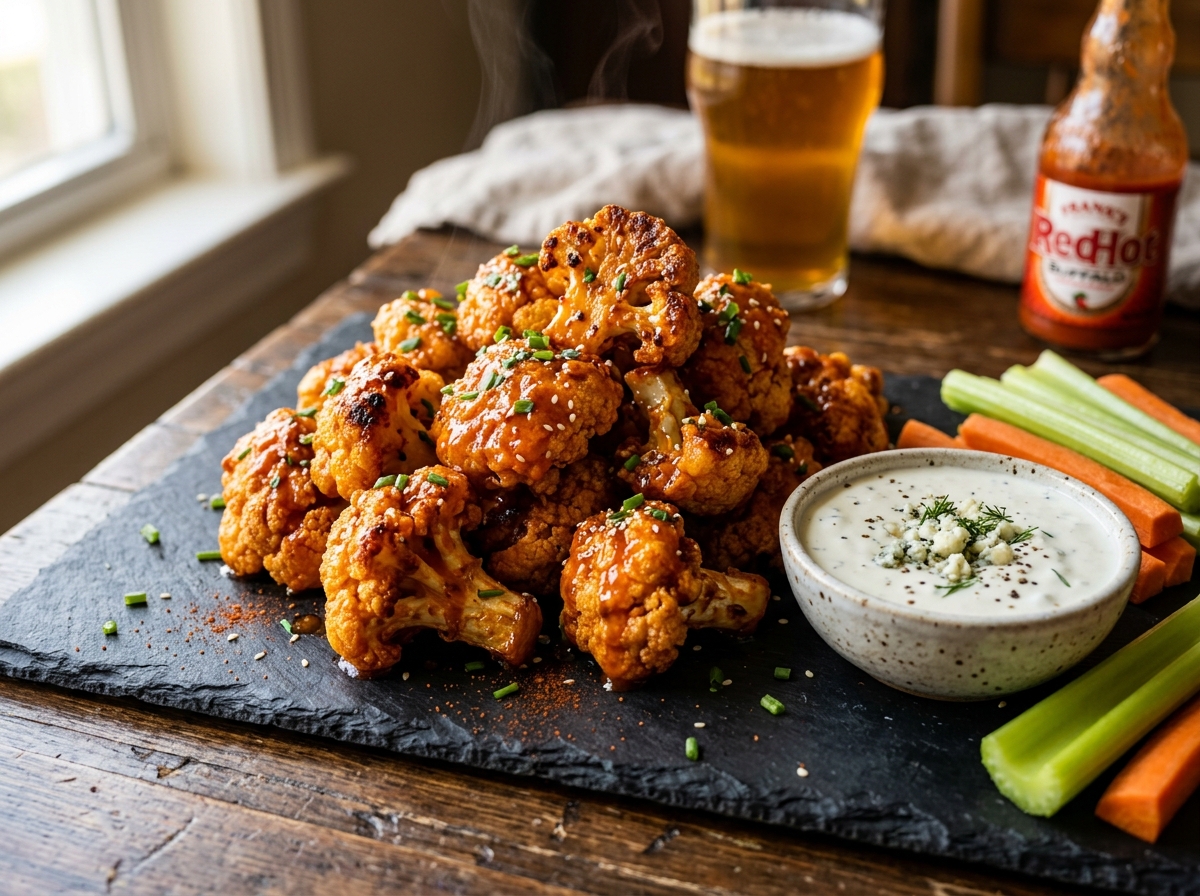
The smell hits you before you even open the air fryer.
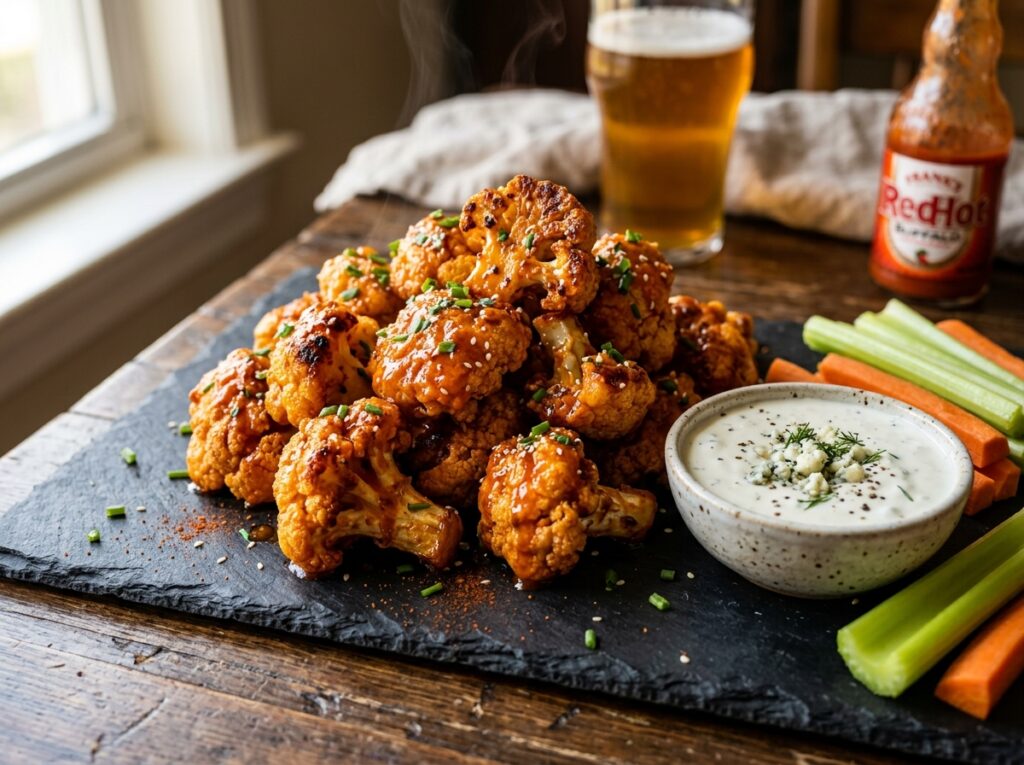
That warm, toasted-batter aroma with the sharp tang of buffalo sauce underneath it. You pull the basket out and the wings look perfect — golden, textured, promising. You plate them, photograph them, feel genuinely proud of what you have made. You bite in.
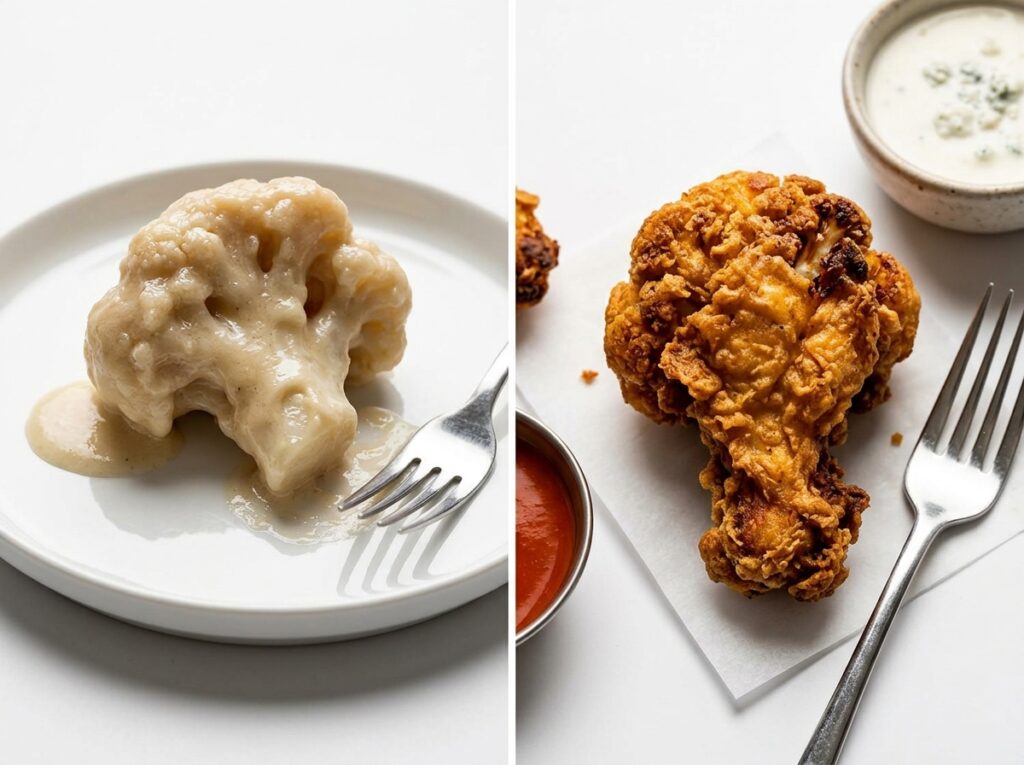
And it is soft. Underneath that deceptively golden shell is a layer of wet, gummy batter clinging to a waterlogged cauliflower floret that tastes more like a soggy crouton than anything resembling a wing.
If this has happened to you — and if you have tried air fryer cauliflower wings more than once, it almost certainly has — you are dealing with what I call Soggy Wing Syndrome. It is not a seasoning problem. It is not an air fryer problem. It is a moisture problem, and it starts long before the batter touches the cauliflower.
I have tested this recipe across more than sixty batches, varying batter composition, cauliflower preparation method, air fryer temperature, basket load, and sauce application timing. What I found is that crispy cauliflower wings are not a matter of luck or a better recipe — they are a matter of understanding exactly what water does inside a batter under convection heat, and building every step of your process around controlling it.
The crunch you are chasing — the kind that actually sounds like fried chicken when you bite down — is completely achievable. But it requires understanding why it keeps failing first.
🧪 The Science of the Crunch — Why Cauliflower Fights You
The Water Content Problem Nobody Talks About
Raw cauliflower is approximately 92% water by weight. That is not a rough estimate — that is the USDA measured composition of fresh cauliflower florets. When heat is applied, that water does not stay locked inside the vegetable politely. It migrates outward, moving from the high-moisture interior toward the lower-moisture exterior — directly into the batter layer you worked so hard to build.
This is the fundamental enemy of the crispy cauliflower wing. You are not just trying to create a crunchy batter. You are trying to create a crunchy batter while the ingredient inside it is actively releasing steam into that batter from below.
Traditional all-purpose flour batter absorbs this moisture and holds it. The batter becomes a wet sponge wrapped around a steaming vegetable. It browns on the very outside surface — which is why it looks done — while remaining completely gummy and wet in the layer directly touching the cauliflower.
The solution requires attacking this problem at two levels simultaneously: the batter chemistry and the heat delivery system.
Starch Gelatinization — Why Cornstarch Changes Everything
When you replace a portion of all-purpose flour in your batter with cornstarch, you are fundamentally changing how the batter behaves under heat.
All-purpose flour contains both starch and protein (gluten). When moisture hits flour-based batter, the gluten network becomes elastic and water-absorbent — it holds onto moisture rather than allowing it to escape. This produces a chewy, thick coating that steams from the inside.
Cornstarch is almost pure starch with minimal protein. When cornstarch granules are heated in the presence of moisture, they undergo gelatinization — they swell, absorb the available water, and then, critically, as the heat continues and the free water evaporates, they undergo retrogradation — the starch chains re-crystallize into a rigid, dry, glass-like matrix.
In simple terms: cornstarch first captures the moisture coming out of the cauliflower, then locks it away and dries out into a hard, crackling shell. The ratio that I have found most reliable after extensive testing is 60% cornstarch to 40% all-purpose flour. The flour provides enough structural binder to hold the coating together, and the cornstarch provides the moisture-capture and crispiness mechanism.
This is why Korean fried chicken — widely considered the crispiest fried chicken in the world — uses high cornstarch ratios in its batter. We are applying the same logic to plant-based cooking.
Convection Heat Transfer — How the Air Fryer Actually Works
An air fryer is not a miniature oven. It is a rapid convection system — a powerful fan circulates superheated air at high velocity around the food surface. This is the mechanism that makes it effective for crisping, and understanding it explains both why it works and why overcrowding destroys it.
The heat transfer from moving air to the food surface can be expressed as:
q=hΔT
Where q is the convective heat flux (heat delivered per unit area per second), h is the convective heat transfer coefficient — which increases significantly with air velocity — and ΔT is the temperature difference between the air and the food surface.
In simple terms: the faster the air moves past the surface of your battered cauliflower, the more heat is delivered per second to that surface, and the faster moisture is driven off and the Maillard browning reaction proceeds.
When you overcrowd the air fryer basket, two things happen simultaneously. First, the high-velocity air can no longer circulate freely around each piece — it deflects off crowded surfaces and the effective h value drops. Second, the moisture being expelled from multiple pieces of cauliflower simultaneously creates a micro-steaming environment inside the basket. The air temperature remains high, but it is now humid air — and humid air carries less capacity to absorb additional moisture from the batter surface.
The result is the same as steaming your battered cauliflower in a covered pot. The surface never dries. The crust never sets.
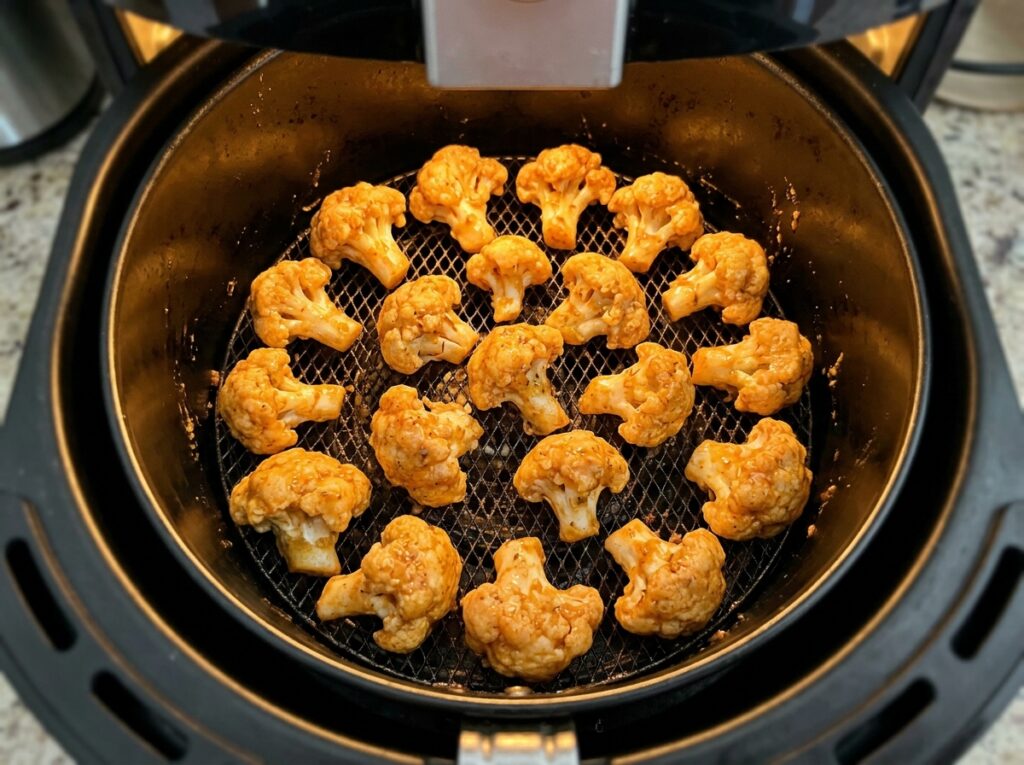
Single layer. Always. No exceptions.
🛒 Pro Buying Guide — USA Market Picks
The Cauliflower: Fresh heads are always superior to pre-cut florets sold in bags. Pre-cut florets have been exposed to more air and have higher surface moisture from the cutting process. Look for tight, firm, white heads at Trader Joe’s, Kroger, or Walmart — avoid any with brown spots or soft patches, which indicate higher internal water content and faster moisture release during cooking. A standard medium head (about 2 lbs / 900g) yields the perfect amount for one full batch.
The Cornstarch: Argo Cornstarch is the national standard and available at virtually every grocery store in the USA — Walmart, Kroger, Target, Publix. Bob’s Red Mill Cornstarch is a good alternative if you prefer an unmodified cornstarch. Both perform identically in this application.
The Flour: King Arthur All-Purpose Flour is my consistent recommendation for batter work — its consistent protein content (11.7%) produces reliable batter structure batch after batch. Available at Whole Foods, Kroger, and Target.
The Hot Sauce: Frank’s RedHot Original is the undisputed standard for buffalo sauce in the USA and is what the original Buffalo wing sauce was built on. Available everywhere. For the honey garlic variation, Mike’s Hot Honey (available at Whole Foods and online) adds complexity that regular honey cannot match.
The Air Fryer: For cauliflower wings specifically, basket size matters enormously given the single-layer requirement. The Cosori Pro II 5.8-Quart Air Fryer ($100–$120 at Target and Amazon) gives you enough basket area for a proper batch without crowding. The Ninja AF101 4-Quart ($80 at Walmart) is the budget pick and works well for smaller batches. If you are serious about air fryer cooking, the Breville Smart Oven Air Fryer Pro ($300 at Williams Sonoma) offers superior heat consistency and a much larger cooking surface.
The Oil Spray: Do not use a standard cooking spray — the propellants in aerosol sprays like PAM can damage air fryer basket coatings over time. Use Chosen Foods Avocado Oil Spray (available at Costco and Whole Foods) or a refillable EVO Oil Sprayer ($12 on Amazon) filled with avocado oil. The light oil coating on the battered cauliflower is essential for Maillard browning.
📋 Ingredients Table
For the Wings
| Ingredient | US Customary | Metric |
|---|---|---|
| Fresh cauliflower head | 1 large head (~2 lbs) | ~900g |
| Cornstarch | ½ cup | 65g |
| All-purpose flour (King Arthur) | ⅓ cup | 42g |
| Garlic powder | 1 tsp | 3g |
| Onion powder | 1 tsp | 3g |
| Smoked paprika | 1 tsp | 2.5g |
| Cayenne pepper | ¼ tsp | 0.5g |
| Kosher salt | 1 tsp | 6g |
| Black pepper, coarse | ½ tsp | 2g |
| Plant-based milk (unsweetened) | ¾ cup | 180ml |
| Apple cider vinegar | 1 tsp | 5ml |
| Avocado oil spray | Light coating | Light coating |
For Buffalo Sauce
| Ingredient | US Customary | Metric |
|---|---|---|
| Frank’s RedHot Original | ½ cup | 120ml |
| Vegan butter (Miyoko’s) | 3 tbsp | 42g |
| Garlic powder | ¼ tsp | 0.5g |
| Honey or agave (optional) | 1 tsp | 7g |
For Honey Garlic Sauce (Alternative)
| Ingredient | US Customary | Metric |
|---|---|---|
| Mike’s Hot Honey | 3 tbsp | 60g |
| Soy sauce (low sodium) | 2 tbsp | 30ml |
| Fresh garlic, minced | 3 cloves | 3 cloves |
| Rice vinegar | 1 tbsp | 15ml |
| Cornstarch slurry | 1 tsp + 1 tbsp water | 3g + 15ml |
⚠️ Why Your Wings Are Mushy — Common Mistakes Table
| The Mistake | What Actually Happens | The Fix |
|---|---|---|
| Wet cauliflower going into batter | Surface water dilutes batter adhesion, steam increases dramatically during cooking, batter slides off | Dry cauliflower completely — 20 minutes air-dry after washing, or pat bone dry with paper towels |
| Using flour-only batter | Gluten network traps moisture from cauliflower steam, batter becomes gummy, never fully crisps | Replace 60% of flour with cornstarch — the starch gelatinizes and retrogrades into a dry crust |
| The Double-Drip Error | Second dip in batter before first layer dries — excess batter creates thick gummy coating | One thin, even coat only — excess batter is the enemy, shake off any drips before air frying |
| Overcrowding the basket | Micro-steaming environment, reduced air velocity, humidity rises, batter never dries | Single layer mandatory with space between each piece — cook in batches, never stack |
| Saucing too early | Hot sauce applied before crust fully sets re-introduces moisture into the batter shell | Air fry first, sauce after — toss in sauce and return to air fryer for 2–3 minutes to re-crisp |
| Temperature too low | Batter dries slowly, internal steam has time to saturate the coating before crust forms | Minimum 400°F / 204°C — high heat sets the crust fast before steam wins |
| Skipping the oil spray | Without fat, Maillard browning is dramatically slower and uneven — pale, matte coating | Light avocado oil spray before cooking — fat is the browning catalyst |
👨🍳 Step-by-Step Method
Step 1 — Break Down and Dry Your Cauliflower
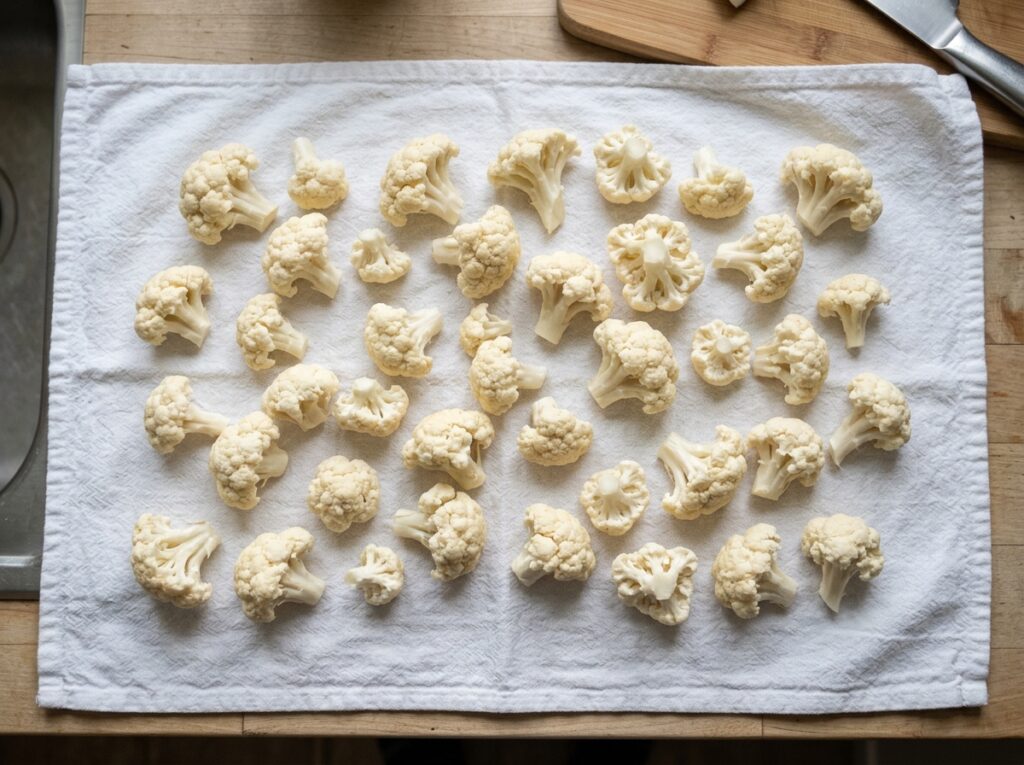
Remove the outer leaves from your cauliflower head and cut the florets into pieces approximately 2 inches / 5cm in size — large enough to have substance when bitten, small enough to cook through in the air fryer’s time window. Aim for relatively uniform sizing so everything cooks at the same rate.
Wash the florets briefly under cold water, then spread them across a clean kitchen towel or several layers of paper towels. This is the step most people skip, and it is the step that determines whether your wings come out crispy or soggy. Leave them to air dry for a minimum of 20 minutes. The surface must be visibly dry to the touch before any batter touches them.
If you are short on time, pat them aggressively with paper towels for a full 2 minutes per batch. They must be dry. No exceptions.
Step 2 — Build the Batter
In a large mixing bowl, whisk together the cornstarch, all-purpose flour, garlic powder, onion powder, smoked paprika, cayenne, salt, and pepper. In a separate small bowl, combine the plant-based milk and apple cider vinegar — let it sit for 2 minutes. The vinegar curdles the milk slightly, creating a buttermilk-like acidity that improves batter adhesion and adds a subtle tang that works beautifully against buffalo sauce.
Pour the milk mixture into the dry ingredients and whisk until completely smooth with no lumps. The batter should be the consistency of thin pancake batter — it coats the back of a spoon but flows freely. If it is too thick, add a tablespoon of milk at a time. Thick batter creates the double-drip gummy coating problem.
Step 3 — The Single-Coat Dip
Working in small batches, drop each dry cauliflower floret into the batter. Lift it out with a fork, hold it over the bowl for 3–4 seconds, and let every excess drip fall away. You want a thin, even coat that you can almost see through in the thinner spots — not a heavy, clumped coating.
Place each piece directly into the air fryer basket as you go. Do not let them sit and pool on a plate — the batter will slide and collect at the bottom.
Step 4 — Arrange, Spray, and Air Fry — Round One
Arrange the battered florets in a single, uncrowded layer in your air fryer basket. Each piece needs visible space on at least three sides. Spray lightly with avocado oil — a 1–2 second pass from about 6 inches away. This thin fat coating is what activates the Maillard browning reaction on the batter surface.
Set your air fryer to 400°F / 204°C and cook for 12 minutes. At the 6-minute mark, pull the basket and turn each piece. Spray lightly again. Return for the remaining 6 minutes.
At 12 minutes, your wings should be golden, dry to the touch on the surface, and the batter should feel set — not tacky. The interior of the cauliflower will be tender but not mushy.
Step 5 — Sauce Application and the Critical Re-Crisp
While your wings cook, prepare your buffalo sauce. In a small saucepan over low heat, melt the vegan butter completely, then whisk in Frank’s RedHot, garlic powder, and honey if using. Keep it warm but do not boil. For honey garlic sauce, combine all ingredients in a small pan over medium heat, add the cornstarch slurry, and stir until just thickened — about 2 minutes.
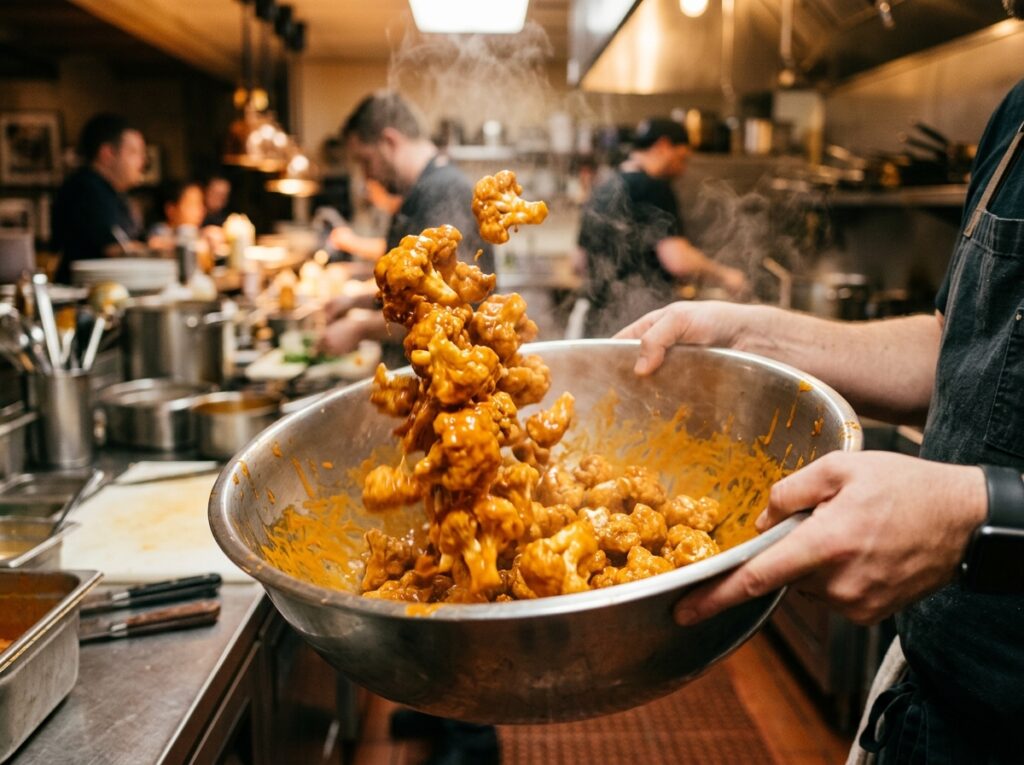
When the wings come out of the air fryer, transfer them to a large bowl. Pour the sauce over them and toss to coat — work quickly and coat evenly. Do not let them sit in the sauce.
Immediately return the sauced wings to the air fryer basket and cook at 400°F / 204°C for an additional 2–3 minutes. This re-crisp phase is the step that separates a genuinely crunchy wing from a saucy soft one. The second heat blast drives off the surface moisture from the sauce and sets the coating into a lacquered, slightly sticky, genuinely crunchy final shell.
Step 6 — Plate and Serve Immediately
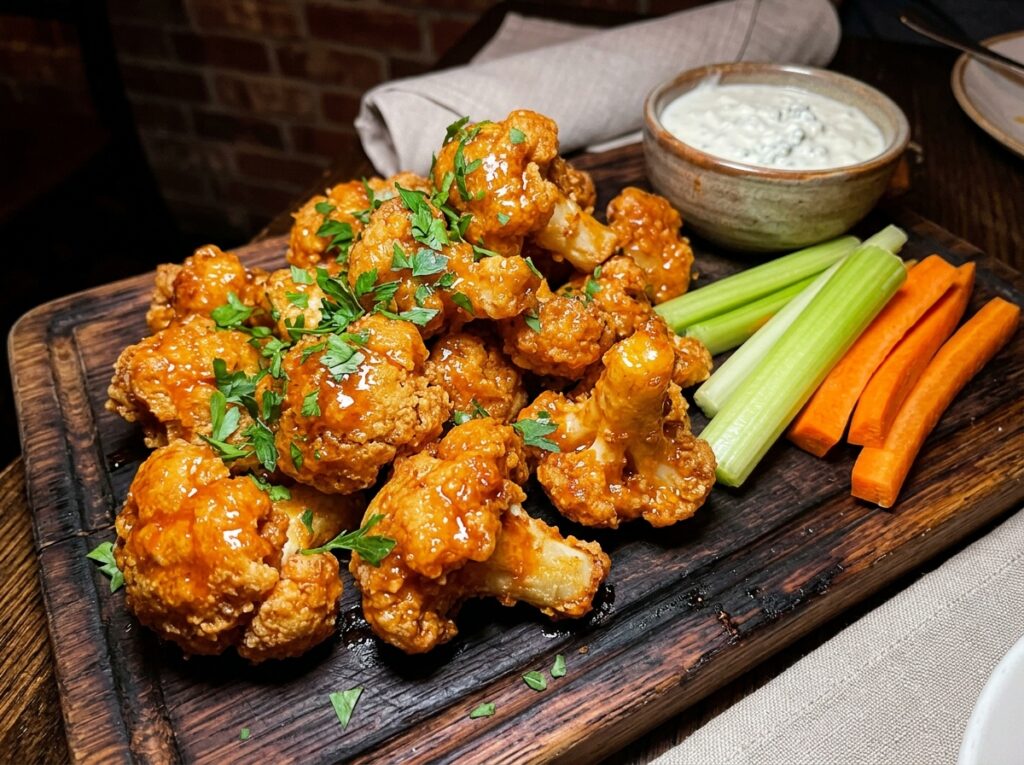
These wings do not hold well. The science does not allow it — cauliflower continues releasing moisture after cooking, and the crust will begin softening within 10–15 minutes of sitting. Plate immediately on a serving board with celery sticks, carrot sticks, and your choice of dipping sauce — blue cheese dressing for the traditionalists, vegan ranch for a plant-based crowd.
Serve the moment they come out. The crunch window is real, and it is short.
💬 Chef Ahmad’s Insight
There is a persistent assumption in American food culture that plant-based cooking is a compromise — that you are giving something up, accepting a lesser version of the real thing. I have never believed that, and cauliflower wings are the recipe I use to make that argument most forcefully. Because when this recipe works — when the cornstarch has done its chemistry, when the convection heat has set the crust in those first sixty seconds, when the re-crisp after saucing has lacquered everything into something genuinely crackling — there is nothing compromised about it. It is just good food. Crispy, saucy, deeply satisfying food that happens to come from a vegetable. The texture is not a trick. It is food science applied with intention. Plant-based does not mean texture-less. It never did. It just means you have to understand the science a little more carefully.
Texture is not a luxury in plant-based cooking. It is the whole argument.
— Chef Hamid | The Flavor Bazaar
🥗 Nutrition Table
Per serving (approximately 6–8 wings, buffalo sauce, no dip). Values are estimates.
| Nutrient | Per Serving |
|---|---|
| Calories | 185 kcal |
| Protein | 5g |
| Total Fat | 7g |
| Saturated Fat | 2g |
| Carbohydrates | 28g |
| Dietary Fiber | 4g |
| Sodium | 720mg |
| Cholesterol | 0mg |
| Vitamin C | 58mg (64% DV) |
Nutritional values are estimates. Actual values vary based on cauliflower size, batter adherence, and sauce quantity used.
🌡️ Food Safety & Temperature Guide
| Stage | Temperature | Notes |
|---|---|---|
| Air fryer cooking temperature | 400°F / 204°C | Minimum for proper crust formation via Maillard Reaction |
| Re-crisp after saucing | 400°F / 204°C for 2–3 min | Drives off sauce moisture, sets final crust |
| Safe internal temp for cauliflower | 185°F / 85°C+ | Fully tender, no food safety concern for vegetables |
| Buffalo sauce heating | 160°F / 71°C | Ensure butter is fully melted and sauce is homogeneous |
| Danger Zone (general food safety) | 40°F–140°F / 4°C–60°C | Do not hold cooked wings in this range for more than 2 hours |
| Batter resting temperature | Room temperature only | Do not make batter ahead and refrigerate — cold batter sticks poorly |
🧊 Storage & Reheating Table
| State | Refrigerator | Freezer | Best Reheat Method |
|---|---|---|---|
| Cooked wings (unsauced) | 3 days, airtight container | Up to 1 month | Air fryer 375°F / 190°C for 5–6 minutes |
| Cooked wings (sauced) | 2 days, airtight | Not recommended (batter becomes permanently soggy) | Air fryer 400°F / 204°C for 4–5 minutes |
| Raw battered cauliflower | Not recommended | Not recommended | Always batter and cook immediately |
| Leftover batter | 24 hours, refrigerated | Not recommended | Whisk well before using — may need 1 tbsp milk to re-thin |
❓ FAQ
Can I use frozen cauliflower instead of fresh?
This is one situation where frozen will significantly hurt your results. Frozen cauliflower has been blanched before freezing and its cell walls are partially broken down — it releases dramatically more moisture during cooking than fresh. If fresh cauliflower is unavailable, thaw frozen florets completely, then press them between paper towels for a full 5 minutes before battering. Expect slightly softer results even with best-practice drying.
Why is my batter falling off during cooking?
Almost always a wet cauliflower problem. The batter needs a dry, slightly rough surface to adhere to. Wet surfaces prevent bonding and the batter slides off as steam builds beneath it. The second cause is batter that is too thick — thick batter creates a heavy coating that peels away under its own weight during the flip. Keep the batter thin, the cauliflower dry, and handle the pieces gently when flipping.
Can I bake these in a regular oven instead of an air fryer?
Yes, but you will need to compensate for the reduced convection. Use the convection setting on your oven if available, set to 425°F / 218°C, and bake on a wire rack set over a baking sheet — never directly on the sheet, or the bottom will steam and go soft. Bake for 20–25 minutes, flipping once at the 12-minute mark. The results are good but will not match the air fryer’s rapid air velocity for crust development.
My wings are golden but still soft inside — what went wrong?
Your florets were likely too large. Pieces larger than 2.5 inches / 6.5cm take too long to heat through, and by the time the interior is properly cooked, the exterior batter has been exposed to steam for too long. Cut more uniformly and aim for consistent 2-inch / 5cm pieces. Also verify your air fryer is actually reaching 400°F — some budget models run 15–20°F cooler than their displays indicate.
What is the best dipping sauce for vegan guests?
Follow Your Heart Vegan Ranch (available at Whole Foods and Sprouts) is the closest plant-based ranch to the real thing and it pairs perfectly with buffalo cauliflower. Kite Hill Dairy-Free Sour Cream thinned with lemon juice and dill makes an excellent tzatziki-style dip for the honey garlic version. For the traditionalist crowd, Primal Kitchen Ranch made with avocado oil is widely available at Target and Walmart and is both dairy-free and genuinely delicious.
Leave a Reply