Introduction
Cloud computing has transformed the way businesses and individuals store, manage, and access data. Instead of relying on expensive physical servers and on-site infrastructure, organizations can now use cloud services to access computing resources over the internet. As cloud technology continues to evolve, understanding the types of cloud computing is essential for making informed decisions about IT infrastructure.
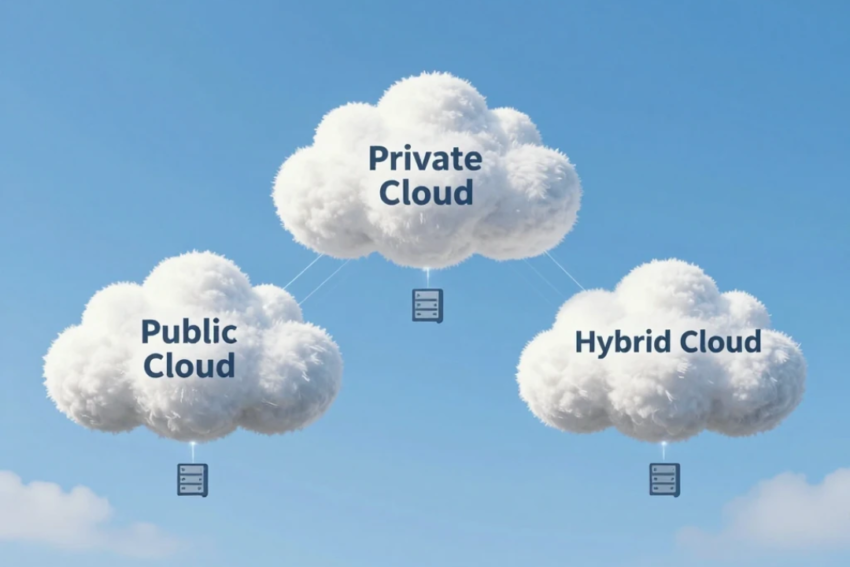
The three primary cloud deployment models are Public Cloud, Private Cloud, and Hybrid Cloud. Each model offers unique advantages, security levels, scalability, and cost structures. Choosing the right cloud environment depends on an organization’s business goals, budget, compliance requirements, and workload.
In this beginner-friendly guide, we’ll explain Public Cloud, Private Cloud, and Hybrid Cloud, compare their features, discuss their benefits and drawbacks, and help you determine which cloud model is best for your needs.
What Are the Types of Cloud Computing?
Cloud computing deployment models describe how cloud infrastructure is owned, managed, and accessed. The three major types are:
- Public Cloud
- Private Cloud
- Hybrid Cloud
Each model provides cloud services differently while offering varying levels of flexibility, security, performance, and control.
Understanding these cloud models helps businesses select the most suitable solution for their operations.
What Is Public Cloud?
A Public Cloud is a cloud environment owned and operated by third-party cloud service providers. Computing resources such as servers, storage, databases, and networking are shared among multiple customers over the internet.
Users only pay for the resources they consume, making the public cloud one of the most cost-effective cloud computing solutions.
Popular public cloud providers include Amazon Web Services (AWS), Microsoft Azure, and Google Cloud Platform (GCP).
How Public Cloud Works
Public cloud providers build and maintain massive data centers around the world. Customers access cloud resources through web portals or APIs without worrying about hardware maintenance or infrastructure management.
Since resources are shared among many users, providers achieve economies of scale that reduce overall costs.
Advantages of Public Cloud
1. Cost-Effective
Organizations avoid purchasing expensive servers and networking equipment. Most providers offer pay-as-you-go pricing, allowing businesses to pay only for the resources they use.
2. High Scalability
Resources can be increased or decreased within minutes, making public cloud ideal for businesses with changing workloads.
3. Easy Deployment
Applications and services can be launched quickly without investing in physical infrastructure.
4. Global Accessibility
Users can access cloud resources from anywhere with an internet connection, making remote work and collaboration much easier.
5. Automatic Maintenance
The cloud provider handles hardware upgrades, security patches, software updates, and system maintenance.
Disadvantages of Public Cloud
Despite its advantages, the public cloud also has some limitations.
- Less control over infrastructure
- Shared computing environment
- Possible compliance challenges for highly regulated industries
- Internet dependency
- Potential vendor lock-in
Businesses handling highly sensitive information may require stronger security measures than a public cloud can provide.
What Is Private Cloud?
A Private Cloud is a cloud environment dedicated to a single organization. Unlike the public cloud, all computing resources are reserved exclusively for one business.
Private clouds may be hosted on-premises or managed by a third-party provider.
This deployment model is commonly used by financial institutions, healthcare organizations, government agencies, and enterprises with strict security requirements.
How Private Cloud Works
Private cloud infrastructure is designed specifically for one organization.
IT administrators have complete control over servers, storage, networking, security policies, and resource allocation.
Because resources are not shared with other organizations, businesses enjoy greater privacy and customization.
Advantages of Private Cloud
1. Enhanced Security
Private cloud environments provide stronger security because infrastructure is isolated from other organizations.
Sensitive customer information remains within a dedicated environment.
2. Greater Control
Organizations control hardware configurations, security settings, software updates, and compliance policies.
3. Better Performance
Since resources are dedicated to one organization, performance is often more consistent during peak workloads.
4. Regulatory Compliance
Private clouds help businesses meet strict regulatory requirements related to data protection and privacy.
5. Customization
Businesses can tailor infrastructure to meet specific application requirements.
Disadvantages of Private Cloud
Although private clouds offer many advantages, they also have certain drawbacks.
- Higher implementation costs
- More complex management
- Requires skilled IT professionals
- Limited scalability compared to public cloud
- Higher maintenance expenses
For small businesses, private cloud solutions may not always be financially practical.
What Is Hybrid Cloud?
A Hybrid Cloud combines both public and private cloud environments, allowing organizations to move applications and data between them as needed.
This model gives businesses the flexibility to keep sensitive workloads in a private cloud while using the public cloud for less critical applications and additional computing capacity.
Hybrid cloud has become increasingly popular because it balances security, flexibility, and cost efficiency.
How Hybrid Cloud Works
In a hybrid cloud environment, both public and private clouds are connected through secure networking technologies.
Organizations decide where each workload should run based on performance, security, and business requirements.
For example:
- Customer payment information stays in the private cloud.
- Website hosting uses the public cloud.
- Backup systems utilize both environments.
This approach provides greater flexibility while optimizing costs.
Advantages of Hybrid Cloud
1. Improved Flexibility
Businesses can choose the most suitable environment for each workload.
2. Better Cost Management
Organizations only use private infrastructure for sensitive applications while leveraging affordable public cloud resources for other tasks.
3. Enhanced Security
Critical data remains protected in the private cloud, reducing exposure to security risks.
4. Business Continuity
Hybrid cloud improves disaster recovery by allowing data and applications to be backed up across multiple environments.
5. Scalability
Businesses can expand into the public cloud during periods of high demand without purchasing additional hardware.
Disadvantages of Hybrid Cloud
Hybrid cloud environments also present several challenges.
- More complex infrastructure management
- Higher integration costs
- Requires advanced networking expertise
- Security configuration can be complicated
- Data synchronization between environments requires careful planning
Proper management tools and skilled professionals are essential for maintaining hybrid cloud environments.
Public Cloud vs Private Cloud vs Hybrid Cloud
The following comparison highlights the key differences between the three cloud deployment models.
| Feature | Public Cloud | Private Cloud | Hybrid Cloud |
|---|---|---|---|
| Ownership | Third-party provider | Single organization | Combination of both |
| Cost | Low | High | Moderate |
| Security | Good | Excellent | Excellent |
| Scalability | Very High | Moderate | Very High |
| Control | Limited | Full | High |
| Maintenance | Provider-managed | Organization-managed | Shared responsibility |
| Best For | Startups, SMBs | Enterprises, government | Growing businesses |
Which Type of Cloud Computing Is Best?
The best cloud deployment model depends on your business needs.
Choose Public Cloud If:
- You are a startup or small business.
- You need affordable infrastructure.
- Your workloads change frequently.
- You want quick deployment.
Choose Private Cloud If:
- You handle confidential customer information.
- Your industry has strict compliance requirements.
- You require maximum security and control.
- You have an experienced IT team.
Choose Hybrid Cloud If:
- You need both flexibility and security.
- Your organization is growing rapidly.
- You want to optimize infrastructure costs.
- You manage both sensitive and non-sensitive workloads.
Real-World Examples of Cloud Computing Types
Understanding practical examples makes cloud deployment models easier to visualize.
Public Cloud Example
A small e-commerce business hosts its website, product catalog, and customer database on Amazon Web Services. The company pays only for the computing resources it uses and scales up automatically during holiday shopping seasons.
Private Cloud Example
A hospital stores patient medical records in a dedicated private cloud to comply with healthcare privacy regulations and maintain complete control over sensitive data.
Hybrid Cloud Example
A large retail company keeps customer payment information in a private cloud while hosting its online store and marketing applications in the public cloud. During seasonal sales, it uses additional public cloud resources to handle increased website traffic.
Future of Cloud Computing Deployment Models
Cloud computing continues to evolve as organizations embrace digital transformation. Hybrid and multi-cloud strategies are becoming increasingly popular because they provide flexibility, resilience, and better workload optimization.
Emerging technologies such as Artificial Intelligence (AI), Machine Learning (ML), Edge Computing, and the Internet of Things (IoT) are also driving greater demand for cloud services. Businesses are investing in cloud infrastructure to improve innovation, reduce operational costs, and enhance customer experiences.
As cloud security and management tools become more advanced, organizations of all sizes will continue adopting cloud-based solutions to stay competitive in a rapidly changing digital landscape.
Conclusion
Understanding the types of cloud computing is essential for selecting the right IT infrastructure. Public Cloud offers affordability, scalability, and ease of use, making it ideal for startups and small businesses. Private Cloud provides enhanced security, customization, and control, making it the preferred choice for organizations handling sensitive data. Hybrid Cloud combines the strengths of both models, allowing businesses to balance security, flexibility, and cost efficiency.
There is no one-size-fits-all solution. The best cloud deployment model depends on your organization’s size, budget, security requirements, and long-term goals. By evaluating your business needs carefully, you can choose a cloud strategy that supports growth, improves efficiency, and prepares your organization for the future of digital innovation.